
Is your lawn dead or just dormant? A homeowner’s guide to August dry spells
If your lawn has gone from green to straw-colored over the last few weeks, you’re not alone - and it’s probably not dead. Late-summer dry spells are normal in Massachusetts, and most lawns in Sudbury and Lincoln are built to handle it. Here’s how to tell what’s going on and what (if anything) to do about it.
Dormant vs. Dead: How to tell the difference
Cool-season grasses like Kentucky bluegrass and fescue (the most common types around here) go dormant under heat and drought stress as a survival strategy. The grass turns brown, but the crown (the growing point at soil level) stays alive.
A quick test: tug on a patch of brown grass. If it resists and stays rooted, it’s dormant. If it pulls up easily with no resistance, that patch may actually be dead and could need reseeding once temperatures cool.
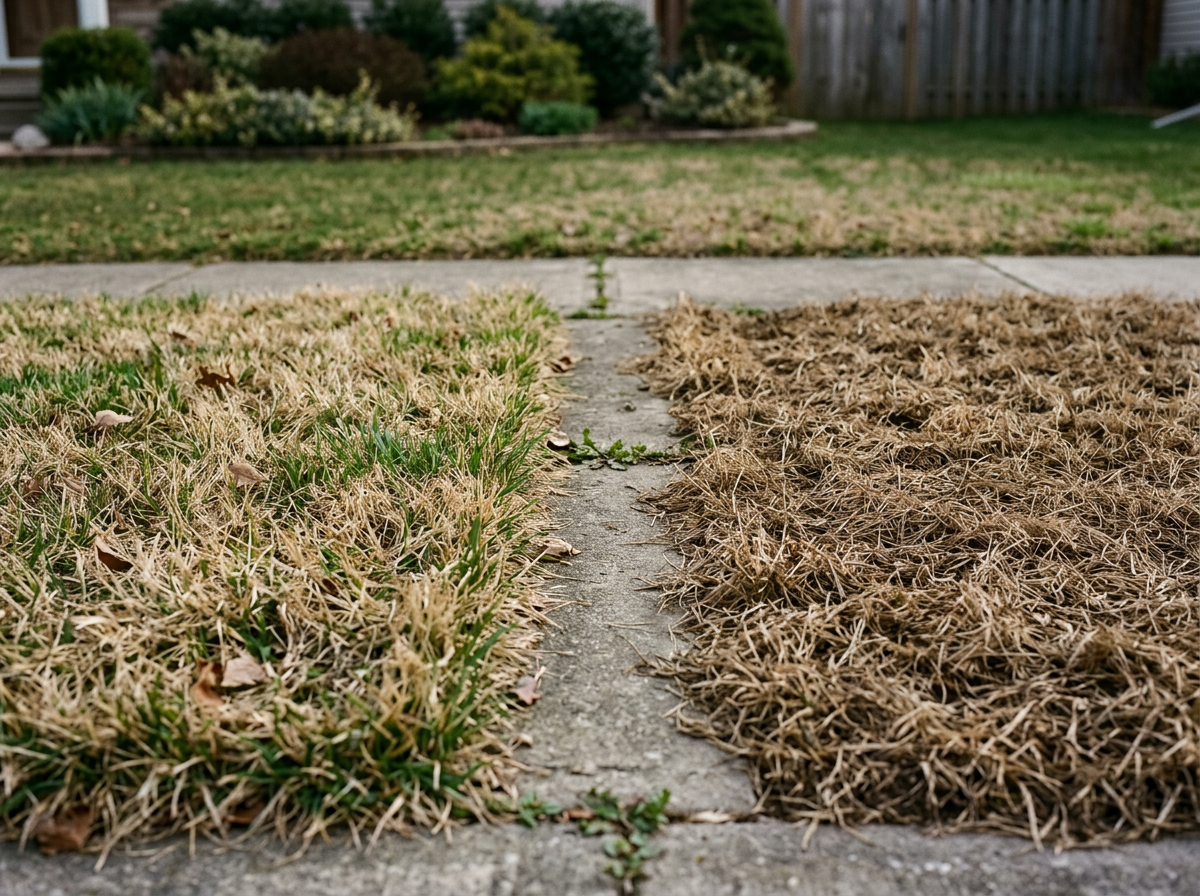
Dormant grass (left) still shows green at the base, while dead grass (right) has no green left.
Should you water a dormant lawn?
You don’t have to, but you have options:
Let it stay dormant. Grass can survive several weeks of dormancy and will typically green back up once regular rain returns in the fall. This is the lowest-effort, lowest-water approach.
Water deeply but infrequently. If you want to keep some green, water about 1 inch per week in one or two sessions rather than light daily watering, which encourages shallow roots and actually makes drought stress worse.
Avoid the in-between. The worst approach is inconsistent watering - enough to break dormancy but not enough to sustain the lawn. That stresses the grass more than doing nothing at all.
Mowing during dry spells
Raise your mower deck if you haven’t already. Taller grass (around 3 to 3.5 inches) shades the soil, holds moisture better, and puts less stress on a lawn that’s already struggling. Avoid mowing dormant grass altogether if you can - foot and mower traffic can damage brown, brittle blades.
What to watch for
Not everything brown this time of year is drought. A few things worth flagging if you notice them:
Circular or irregular brown patches with a defined edge, rather than overall browning, can point to fungus rather than drought.
Grass that stays brown after fall rain returns may indicate the crown didn’t survive and that section needs reseeding.
Thinning specifically along the edges of driveways and sidewalks is often heat reflected off pavement rather than a broader lawn health issue.
Looking ahead to fall
Late summer stress is exactly why fall is the best time for aeration and overseeding in this region- cooler temperatures and more consistent rain give grass the best shot at recovering and filling back in before winter. If your lawn takes a hit this August, don’t panic; there’s a strong recovery window coming up in a month or two.
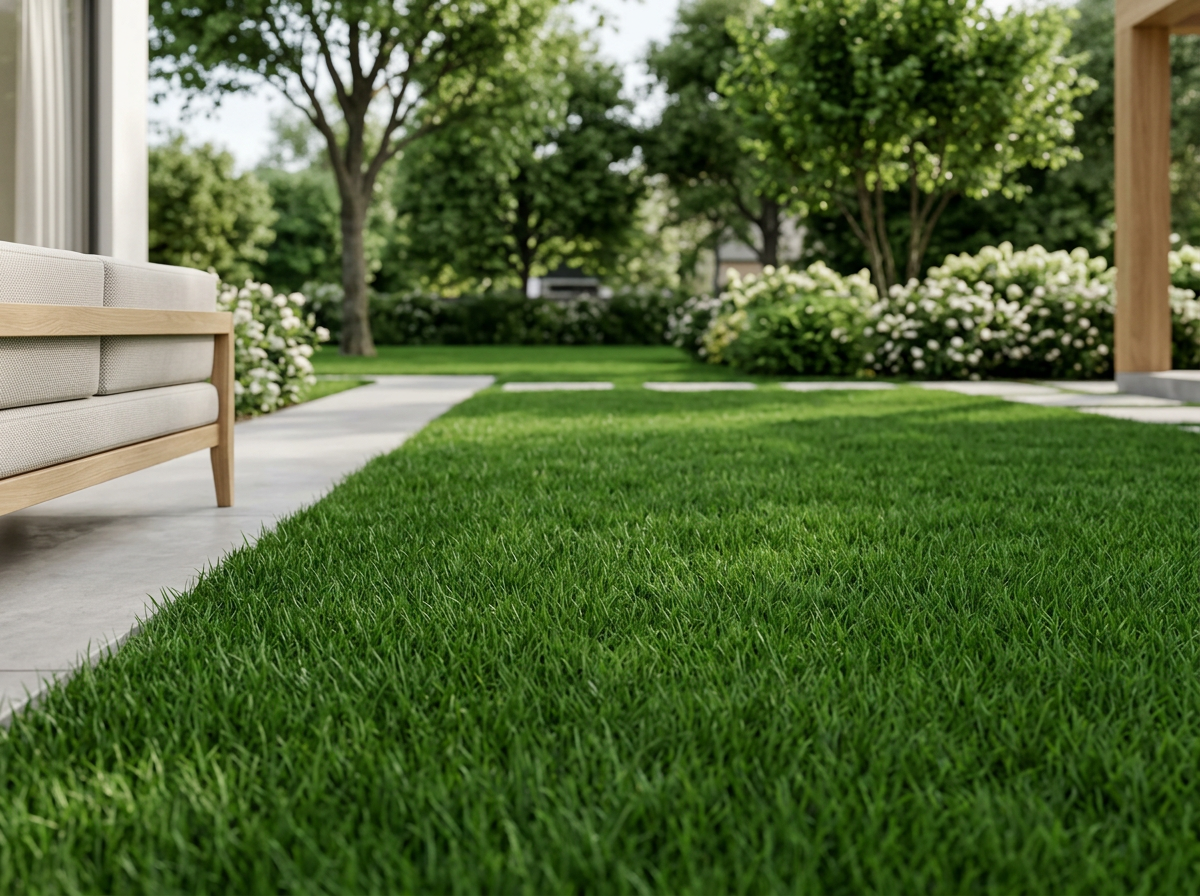
A healthy, well-watered green lawn in late summer.
Not sure whether your lawn needs attention now or can wait until fall? We’re happy to take a look. We work with homeowners throughout Lincoln, Sudbury, and the surrounding towns. Reach out or call 617-293-1016.