
Massachusetts heat waves: How to keep your lawn alive during 80-90° dry spells
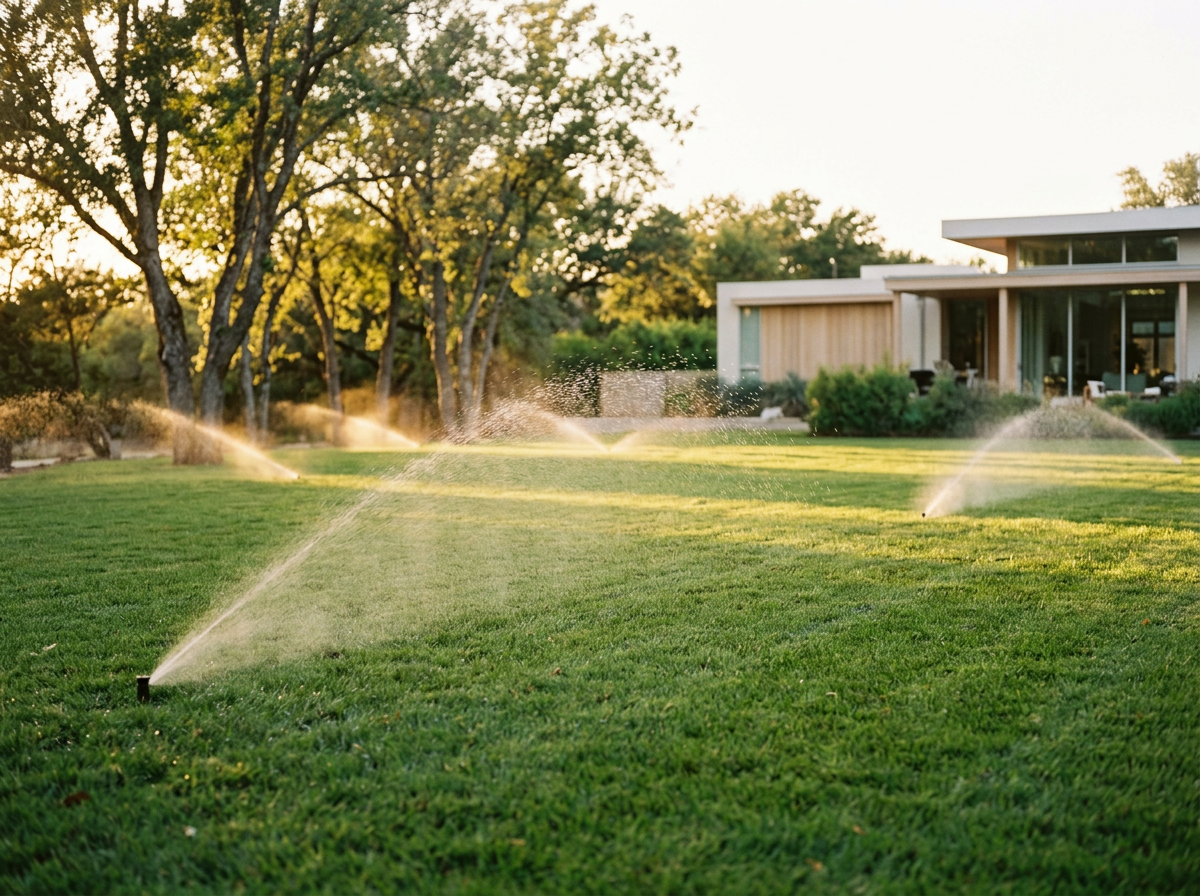
Early morning sprinkler watering, the best time to water a lawn during hot, dry weather.
When we hit a stretch of 80-90° days with no rain, it's tempting to think more water is always better. It's not. Also, watering the wrong way during a heat wave can actually stress your lawn more than the heat itself.
Water deeply, not often
During a dry spell, your lawn needs about 1 to 1.5 inches of water per week; but the way you deliver it matters more than the amount. A few short waterings a day trains roots to stay shallow, which makes grass more vulnerable to heat and drought. Instead, water deeply 2-3 times a week, giving the ground enough time to soak it in before the next round. This encourages roots to grow deeper, where the soil stays cooler and moister.
A simple way to check: place a few empty tuna cans around your lawn while running your sprinkler. Once they've collected about half an inch, that's roughly one deep watering session.
Time of day matters
Early morning (ideally before 9 or 10 AM) is the best time to water. The ground is cool, there's less wind, and water has time to soak in before the afternoon heat causes evaporation.
Avoid watering in the evening. Grass that stays wet overnight is more prone to fungus and disease — the last thing a heat-stressed lawn needs.
If your town has watering restrictions
Many towns in Massachusetts (including several we work in) have odd/even day watering schedules or outright bans during drought conditions. Check your town's website before setting a routine, since restrictions can change quickly during a dry summer.
Signs your lawn needs help vs. signs it's just coping
Some browning and a slightly duller color during a heat wave is completely normal — that's your lawn's natural defense mechanism. Signs of more serious stress include:
Grass that doesn't spring back after you walk on it (footprints stay visible)
Soil that's pulled away from the edges of walkways or driveways
Patches that go from brown to gray or straw-like, rather than a warm tan-brown
When to call in help
If you're watering consistently and correctly but your lawn still isn't holding up, it may be a deeper issue — compacted soil, pest damage, or an irrigation system that isn't distributing water evenly. That's when it's worth having someone take a look, rather than guessing and wasting water in the meantime.
Not sure if your lawn needs a change in care, or a full watering system check?Contact Coronado Landscaping for a quick assessment. We serve homeowners across Boston's western suburbs.